
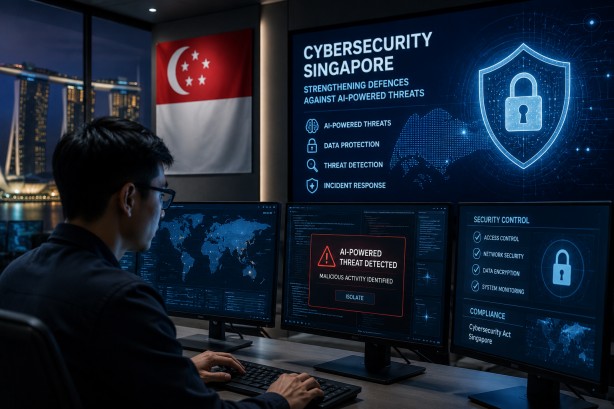
In response to the mounting threat of sophisticated cyberattacks fueled by artificial intelligence, Singapore has rolled out enhanced cybersecurity protocols targeting its critical information infrastructure (CII). The revamped Cybersecurity Code of Practice mandates that CII operators implement a locally produced intrusion detection tool and enforce rigorous board-level oversight of their cybersecurity measures. These regulations are applicable to 11 vital sectors, including banking, energy, healthcare, telecommunications, transport, water, and government.
The introduction of these heightened requirements comes amid a backdrop of recent cyber intrusions that have affected Singapore’s significant telecommunications firms. Authorities have voiced concerns that AI is being leveraged by cybercriminals to unearth vulnerabilities and orchestrate more sophisticated attacks. As a result, there is an urgent call for organizations to enhance their governance structures, bolster their cyber resilience, and conduct regular assessments of their cybersecurity frameworks to safeguard vital national infrastructure.
Singapore’s proactive stance reflects an acknowledgment of the evolving nature of cyber threats, where attackers are increasingly utilizing AI to outmaneuver traditional security measures. By mandating the use of advanced detection tools and insisting on comprehensive oversight, the nation aims to stay ahead of potential disruptions that could have far-reaching impacts on essential services and national security.
These developments underscore the critical need for continuous adaptation in cybersecurity practices, especially for sectors that form the backbone of a nation’s infrastructure. As cyber threats grow more complex, the emphasis is on creating robust defenses that can withstand the pressures posed by emerging technologies. The measures not only aim to shield Singapore from immediate threats but also to set a precedent for resilient cybersecurity practices in the face of future challenges.