
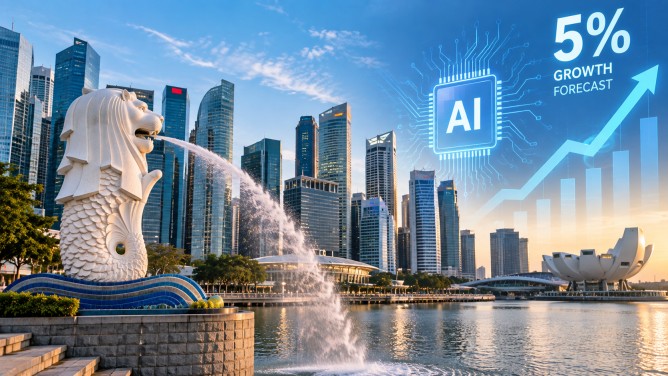
Singapore’s economic growth is projected to reach 5% by 2026, an increase from the earlier estimate of 3.5%, driven by a continued surge in demand for artificial intelligence technologies. This optimistic forecast emerges from a recent survey involving 21 economists and analysts, indicating that the most probable growth range falls between 5% and 5.4%. In the previous quarter, the nation’s economy experienced a significant expansion of 5.9% year-on-year, outperforming the earlier median forecast of 4.3%.
The survey highlights the pivotal role of an ongoing AI-driven technology upswing in bolstering Singapore’s economic outlook. Analysts also identified the de-escalation or resolution of the conflict in West Asia and stronger-than-expected global economic growth as potential factors that could further enhance this positive trajectory.
Despite the favorable predictions, there are looming risks that could potentially derail these growth prospects. A prolonged conflict in West Asia and a possible collapse of the AI investment bubble are seen as major threats to economic stability. These concerns underscore the delicate balance Singapore’s economy must maintain to sustain its projected growth rate.
Looking further ahead to 2027, economic experts anticipate a GDP growth rate of 3.1%. Inflation is expected to settle at 2.1% for 2026, with the Monetary Authority of Singapore’s core inflation forecast at 1.9%. The unemployment rate is projected to remain steady at 2.1% by the end of the year, reflecting the continued resilience of Singapore’s labor market.