
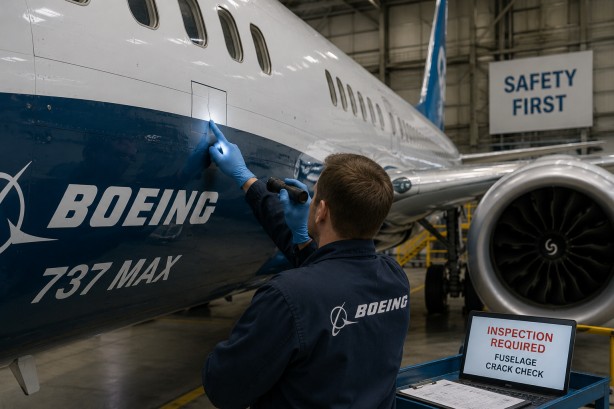
In a directive affecting nearly 471 aircraft, U.S. aviation regulators have instructed operators of Boeing 737 Max planes to conduct inspections for potential structural cracks. This initiative, slated to commence in September, focuses on a specific fuselage component known as the bear strap. The bear strap consists of structural sheets that provide support around the plane’s exit doors, and similar issues had previously been identified in older Boeing 737 Next Generation models, leading to inspections of those aircraft as well.
Although the 737 Max fleet has not yet reported any such cracks, regulators are exercising caution due to the aircraft’s similar design and manufacturing procedures. These factors raise the possibility that the Max could develop the same structural issues. The regulators emphasized the importance of these inspections, warning that undetected cracks have the potential to weaken a critical structural component, which could compromise the aircraft’s structural integrity.
Boeing has expressed its cooperation with the airlines regarding this matter since it was first identified in 2019. The company has endorsed the mandatory inspections, stating that they are a preventative measure intended to detect and address any issues before they escalate to critical levels. This proactive approach aims to ensure the continued safety and airworthiness of the 737 Max fleet.
The call for inspections comes amid ongoing scrutiny of the Boeing 737 Max, which has been under the spotlight following past safety concerns and questions about its manufacturing and engineering quality. The aircraft model had been grounded globally after experiencing two tragic crashes in 2018 and 2019. This latest inspection directive is part of continued efforts to maintain the safety and reliability of the aircraft as it returns to service.