
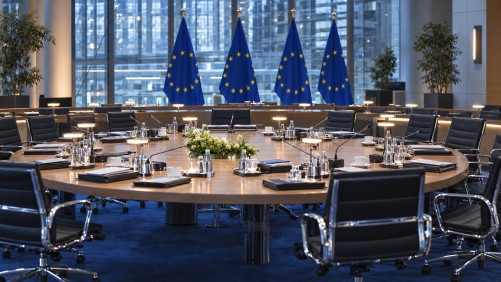
As the European Union grapples with its financial future, European affairs ministers are convening in Brussels to negotiate the bloc’s upcoming seven-year budget. Under the presidency of Ireland in the Council of the European Union, these discussions are crucial as the EU faces the challenge of balancing its financial commitments while accommodating diverse member state priorities.
The European Commission has put forward a proposal for a €1.9 trillion budget for the 2028–2034 period. However, this proposal has sparked significant debate among member states. Countries like Germany, Denmark, the Netherlands, Sweden, and Austria are advocating for reductions, whereas other nations are emphasizing the need to maintain robust funding for agriculture and regional cohesion. Ireland’s leadership is pivotal in seeking a consensus on not only the size and priority of the budget but also the contributions from each member state.
A significant aspect of these negotiations is the EU’s need to begin repaying post-Covid recovery loans starting in 2028, which will necessitate an annual outlay of approximately €24–€25 billion. Amid these financial concerns, discussions are also focusing on potential new sources of revenue for the EU. Proposed measures include redirecting certain carbon levies, contributions from large companies, tobacco excise duties, and taxes related to electronic waste, potentially generating around €44 billion annually.
Further proposals under consideration involve taxes on cryptocurrencies, large technology companies, and a gambling levy. However, introducing any new revenue measures requires unanimous agreement from all EU member states, highlighting the complexity of achieving consensus.
In preparation for an EU leaders’ summit scheduled for October, Ireland is drafting a negotiating framework that aims to facilitate progress on these budgetary discussions. The Irish government is particularly focused on reaching an agreement during its presidency.
Alongside these budget talks, the European Union and the Philippines have reported significant advancements in their long-standing negotiations for a free trade agreement. Initially launched in 2016 and resumed in 2024, the trade deal is close to being finalized, with the potential to reduce tariffs on over 97% of bilateral trade. This agreement could significantly impact EU-Philippines trade, which was valued at €17.6 billion in goods and €10.3 billion in services last year.