
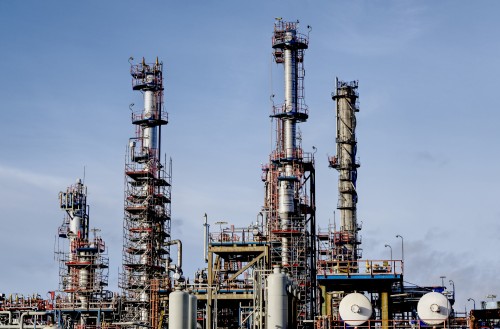
Recent developments in the Middle East have led to a slight uptick in oil prices, as renewed tensions between the United States and Iran spark concerns over potential disruptions to energy shipments through the strategic Strait of Hormuz. Brent crude has seen a 0.8% increase, reaching $72.57 per barrel, while US West Texas Intermediate (WTI) has climbed 1.3% to $70.11 per barrel. Despite hopes for a gradual recovery in oil exports, the market remains on edge due to possible supply risks.
The Strait of Hormuz, a critical chokepoint for global oil supplies, has been the site of recent attacks on vessels, leading to slowed tanker traffic and heightened uncertainty about the stability of energy supplies worldwide. Although there has been an agreement between the US and Iran to resume diplomatic talks and halt the recent escalation of hostilities, traders remain wary about how quickly supply chains can return to normal.
Analysts emphasize that the physical flow of oil is still encountering significant hurdles. Issues such as tanker congestion, infrastructure damage, and reduced production levels continue to pose challenges. These factors contribute to the uncertainty that surrounds the timeline for a full return to pre-disruption supply levels, with some experts warning that it could take months to achieve stability.
In the context of these challenges, the sensitivity of the oil market to geopolitical factors has been highlighted once more. The intertwined nature of global energy supplies and regional tensions underscores the fragility of the current situation. As stakeholders closely monitor the evolving dynamics, the industry braces for potential volatility in the coming months.