
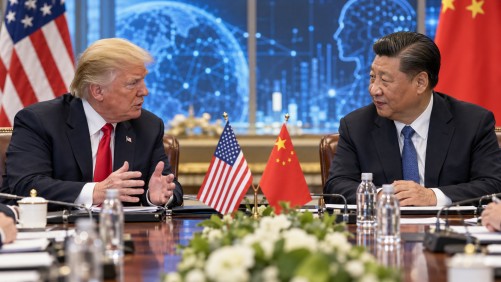
During a summit on September 25, U.S. President Donald Trump and Chinese President Xi Jinping engaged in discussions about the escalating conflict in the Middle East. The meeting comes as Iran proposed a seven-day plan aimed at reopening the strategic Strait of Hormuz and alleviating regional tensions.
Iranian Foreign Minister Abbas Araqchi outlined the plan, which promises to restore maritime traffic in the Strait of Hormuz within a week if accepted by the United States. The proposal calls for an end to hostilities, the lifting of the U.S. blockade on Iranian ports, the release of frozen Iranian funds, and the removal of oil sanctions. While Iran has shown support for returning to a previous negotiation framework led by China, it remains firm on not making concessions regarding its nuclear program, particularly uranium enrichment.
Although the United States has not formally accepted Iran’s proposal, it has described ongoing discussions through intermediaries as constructive, especially concerning nuclear issues. During the summit, President Trump issued a warning to President Xi against providing any form of support to Iran, whether direct or indirect. U.S. Ambassador to China David Perdue later confirmed that China assured the U.S. that it was not assisting Iran.
The conflict has significantly disrupted energy flows through the vital Strait of Hormuz and heightened tensions across the Gulf region, including in Yemen and Lebanon. In response to the growing security concerns, Saudi Arabia, Pakistan, and Turkey have been in talks about enhancing military and intelligence coordination.