
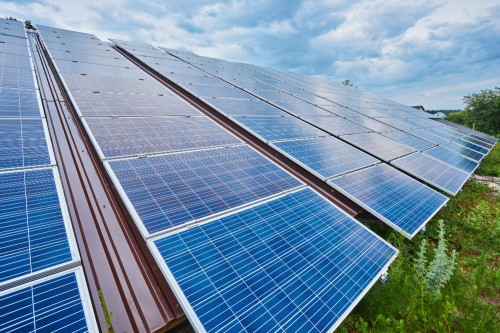
Solaren Renewable Energy Solutions Corporation, a company recognized by the Department of Energy and based in Tarlac, Philippines, has spotlighted a prevalent challenge among power-intensive businesses in Southeast Asia. Despite having over 85 megawatts installed through 2,500 solar projects, Solaren has identified a significant discrepancy between the electrical capacity businesses have on paper and what they can effectively utilize during real-world operations. This issue is particularly acute for sectors such as manufacturing, cold storage, and food production, where operational demands frequently outstrip what documented capacities suggest should be available.
The problem originates from several technical anomalies that can cause a gap between theoretical and practical electrical capacity. These include voltage fluctuations causing motors to draw excessive current, phase imbalances affecting transformer load efficiency, and harmonic distortions from non-linear equipment. Such factors collectively shrink the reliable operating capacity without altering the documented figures. This discrepancy becomes evident in electricity bills, as utilities often calculate demand charges based on short-duration peaks, which can be triggered by minor load imbalances or transient voltage events. Consequently, businesses are burdened with costs for peak usage that they neither sustain nor fully comprehend.
Solaren has observed this pattern frequently among its commercial and industrial clients, including prominent names like Toyota, Oishi, McDonald’s, and Dunkin’. Even though these clients have successfully reduced their energy consumption through grid-tied solar solutions, many still face challenges related to demand charges and equipment stress due to dynamic load profiles and inadequate power factor correction. Solaren asserts that merely increasing generation capacity is insufficient. Instead, addressing this usable power gap necessitates a comprehensive approach involving power factor correction, harmonic filtering, precise load profiling, and the integration of battery storage systems designed for demand management.
As an established player in the renewable energy sector, Solaren Renewable Energy Solutions Corporation holds a PCAB license and has been honored with the Asian Power Award for Solar Power Project of the Year. With a diverse clientele spanning manufacturing, food service, retail, logistics, and public infrastructure, Solaren continues to advocate for solutions that bridge the gap between documented capacities and actual usable power, ensuring that businesses can operate smoothly without unexpected power limitations.
Legal Disclaimer:
The information contained in this article has been provided by independent third-party contributors, clients, or content partners. We do not independently verify the accuracy, completeness, legality, ownership, licensing, or reliability of submitted content, including text, images, videos, trademarks, or other media materials. The submitting party is solely responsible for ensuring that all content, including images and media assets, complies with applicable copyright, trademark, licensing, and intellectual property laws. We disclaim liability for any unauthorized use of copyrighted or proprietary materials by third parties. If you believe that any content published on this platform infringes your intellectual property rights, kindly contact the author above for prompt review and resolution.