
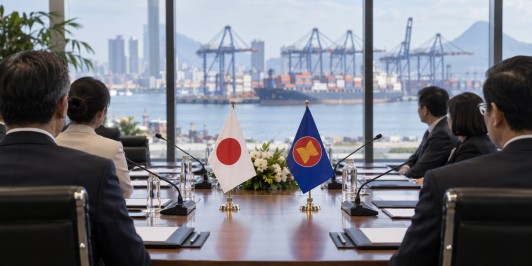
The dynamic landscape of global trade and technology is prompting Japan and the Association of Southeast Asian Nations (ASEAN) to consider enhancing their existing economic partnership. In a meeting held in Manila on September 20, economic ministers from both sides agreed to explore an expansion of their agreement, emphasizing the need to bolster supply-chain resilience, energy security, and the integration of artificial intelligence into their economies.
As global supply chains face increasing risks and the importance of AI continues to rise, Japan and ASEAN are looking to update their partnership to address these challenges. Discussions also touched upon strategies to ensure stable energy supplies, especially in light of disruptions affecting key routes in the Middle East. Japan’s commitment to supporting the strengthening of oil stockpiles within ASEAN countries was reaffirmed as part of a broader effort to enhance regional energy security.
Since its inception in 2008, the Japan-ASEAN economic partnership agreement has expanded to include trade in services and investment. The partnership has facilitated significant economic interaction, with two-way merchandise trade reaching $245.4 billion in 2025, while Japanese investment in ASEAN totaled $9.5 billion. These figures underscore the importance of continued economic collaboration amidst current geopolitical tensions and uncertainties in global trade.
The ministers emphasized the necessity for closer economic cooperation to navigate the complexities of today’s international landscape. As the world grapples with technological advancements and geopolitical shifts, Japan and ASEAN’s initiative to revisit and potentially expand their agreement reflects a proactive approach to sustaining and enhancing mutual economic benefits.