
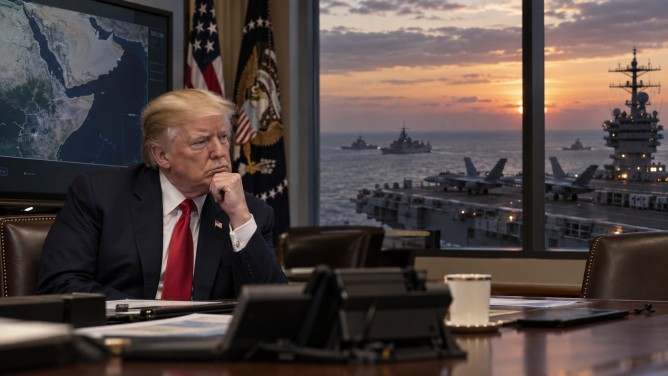
Amid ongoing tensions in the Middle East, the United States finds itself at a strategic crossroads concerning its military involvement in Yemen. The complex conflict, which has seen Iran-backed Houthi rebels intensifying attacks on Saudi Arabian interests, has prompted calls from Saudi Arabia for U.S. intervention. However, President Donald Trump has postponed a decision on launching military strikes against Houthi targets, despite preparations already underway by U.S. forces.
Following a conversation with Saudi Crown Prince Mohammed bin Salman, President Trump initially directed the Pentagon to prepare for potential airstrikes. These preparations included approving target lists and readying U.S. warplanes for possible missions. Yet, by Sunday, the Trump administration opted to temporarily hold off on any military action, reflecting a cautious approach amid broader regional complexities.
The decision to delay strikes comes as the U.S. military remains heavily engaged in the broader conflict with Iran. Some officials within the administration have voiced concerns that opening another military front against the Houthis could overextend American resources, already stretched by existing commitments in the region. The reluctance also reflects skepticism about the efficacy of airstrikes in compelling the Houthis to alter their strategies, given past experiences where such operations failed to produce enduring resolutions.
The Yemeni conflict, where the Houthis are pitted against the internationally recognized government backed by Saudi Arabia, has seen a recent resurgence in violence. The instability threatens the security of the Red Sea and the critical Bab al-Mandab Strait, areas vital for global energy supplies. As the situation evolves, regional experts and U.S. officials continue to debate the potential impact and effectiveness of further military intervention in the conflict.